May 25, 2026
20-Minute Independent Play Ideas While Cooking Dinner
Discover quick, no prep activities that keep 4 to 7 year olds happily occupied for 20 minutes. Screen free busy baskets and self-directed play ideas perfect for dinner prep time.
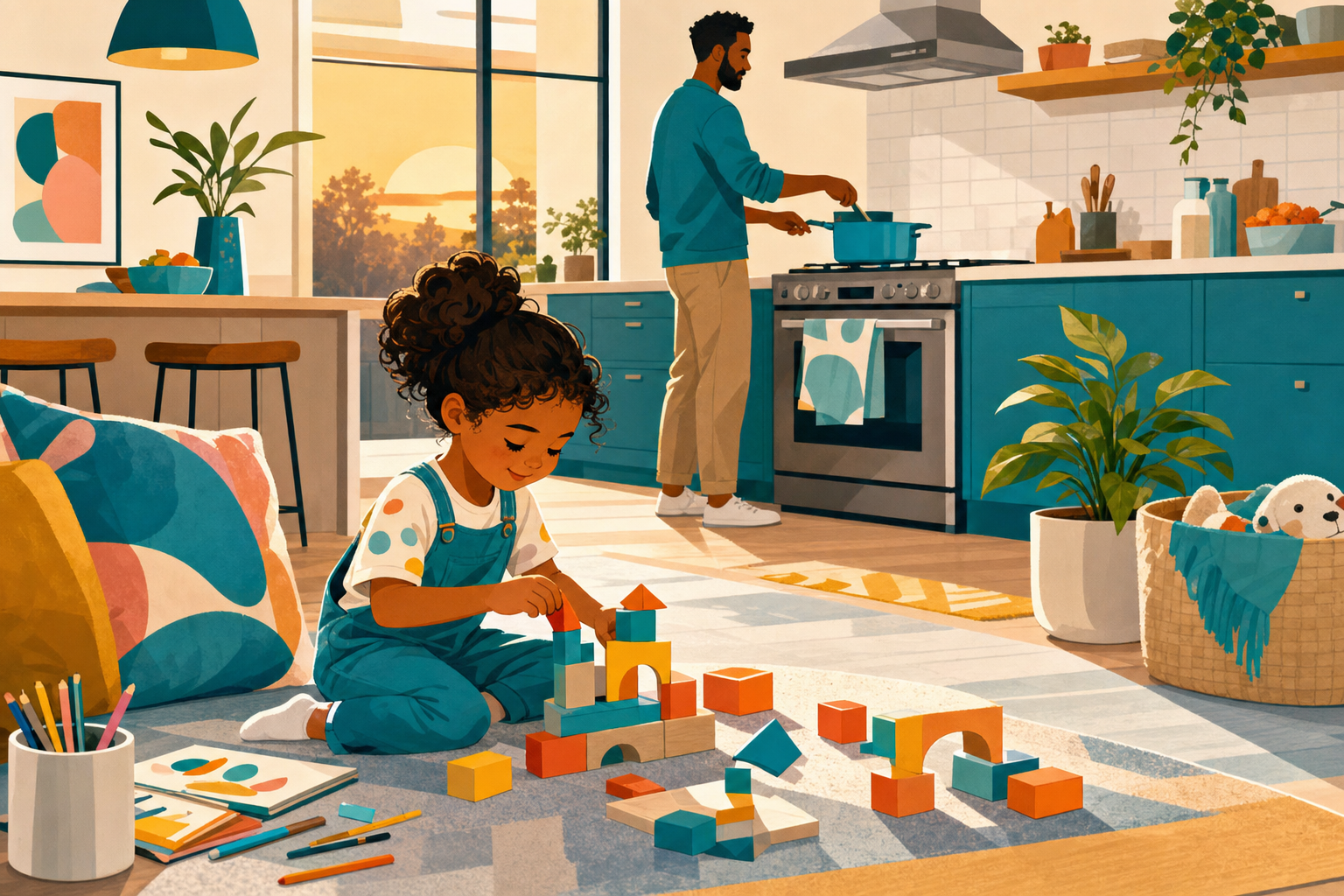
How to Keep a 4- to 7-Year-Old Busy Indoors When You're Cooking Dinner and Need 20 Minutes of Independent Play
You're preheating the oven, your timer's set for forty minutes, and your child is already standing at your elbow asking what's for dinner. Again. You need twenty uninterrupted minutes to get food on the table, but you're not willing to hand over a tablet just to chop onions in peace.
The good news: 4- to 7-year-olds are developmentally ready for short bursts of self-directed play, especially if you set them up for success before you start cooking. The challenge is that most independent play ideas for 4 year olds require too much prep, too much cleanup, or too much parental involvement to work during the dinner rush. Here's how to create a realistic plan that actually buys you the time you need.
Set Up a Busy Basket for Preschoolers Before Dinner Time
A busy basket is a container of rotating toys or activities that only comes out during specific times, like while you're cooking. The novelty factor keeps kids engaged longer than their everyday toys.
Keep it simple. Fill a small bin or basket with 3 to 5 items your child hasn't seen in a week or two. Swap the contents every few days so it stays fresh. Store it somewhere your child can't access outside of dinner prep, which preserves the special factor.
Good busy basket staples include small building sets, magnet tiles, a tin of crayons with plain paper, play dough in a sealed container, or a set of animal figurines. Avoid anything with tiny pieces if you have a younger sibling crawling around, and skip markers unless you're okay with potential furniture damage.
Place the basket in a visible spot near the kitchen, like the dining table or a corner of the living room where you can glance over. Your goal is 20 minute independent play, not invisibility. You want your child close enough that you can check in without leaving the stove.
Quick No Prep Activities for Kids You Can Launch in Under Two Minutes
Sometimes you don't have time to assemble a basket. You need something you can set up in seconds while the pot is boiling over.
Here are quiet activities for kids at home that require almost zero advance work:
- Tape roads on the floor. Hand your child a roll of painter's tape and a handful of toy cars. Let them build a road system on the kitchen floor while you cook. Cleanup is peeling up tape later.
- Blanket fort with books. Drape a sheet over two chairs, toss in a flashlight and three picture books. Call it a reading cave. Most kids this age will stay put for at least fifteen minutes.
- Sorting challenge. Dump a container of dried pasta, buttons, or LEGO bricks on a towel and give your child a muffin tin. Ask them to sort by color or size. It's screen free and weirdly absorbing.
- Audio stories. Cue up a podcast or audiobook made for kids (many library apps have free options). Hand your child a set of crayons and paper, or let them build with blocks while they listen. The audio keeps them anchored in one spot.
Coloring is one reliable boredom buster when you need a child to stay seated. A free Chunky Crayon page buys you ten quiet minutes and requires nothing but a printer and crayons you already own.
Self-Directed Play Ideas Indoors That Work in the Kitchen
If your child insists on being in the same room, give them a task that feels important but doesn't require your constant supervision.
Set up a pretend cooking station on the floor or at the far end of the counter. Give them a plastic bowl, a wooden spoon, and a few safe ingredients like dried beans, uncooked pasta, or a cup of water. Let them "make soup" while you make the real dinner. Most 4- to 7-year-olds will happily stir and pour for twenty minutes if they think they're helping.
Another option: give them a damp cloth and ask them to wipe down the baseboards, the front of the dishwasher, or the legs of the kitchen chairs. It's not deep cleaning, but it keeps their hands busy and makes them feel useful. You can also hand them a stack of plastic containers and lids and ask them to match pairs, which is surprisingly engaging for kids who like puzzles.
If you have a play kitchen, move it into a corner of the kitchen during dinner prep. Stock it with a few real items, like a small pot, a spatula, or a dish towel, to make it feel more legitimate. Kids this age love mimicking adults, and giving them real tools (even safe ones) extends their focus.
Room-by-Room Safety Setup for Screens Free Activities While Cooking Dinner
Independent play only works if you trust the space. Before you start cooking, do a quick safety scan of wherever your child will be playing.
In the kitchen, move sharp objects, hot pans, and cleaning supplies out of reach. If your child is playing near the stove, set a physical boundary with a chair or a piece of tape on the floor they know not to cross. Teach them the "hot stove" rule early: when the stove is on, they stay on the other side of the line.
If they're playing in the living room or dining room, clear the coffee table of anything breakable. Push furniture away from outlets if your child tends to explore. Close doors to rooms you don't want them wandering into, like bathrooms or bedrooms with unsecured drawers.
For kids who tend to get up and roam, try setting a visual timer they can see from across the room. Tell them when the timer goes off, dinner will be ready and you'll come get them. Many 5- to 7-year-olds do better with a concrete endpoint than an open-ended "go play."
If you're managing more than one child during dinner prep, separate them into different activities. One might color at the table while the other builds blocks in the living room. Keeping them apart reduces fights and interruptions. For more ideas on managing multiple kids with different needs, check out after-school routines that reset the whole house before the evening chaos starts.
What to Do When Independent Play Breaks Down Mid-Dinner
Even with the best setup, some kids will interrupt. They'll need water, have a question, or decide the activity is boring after eight minutes.
Have a backup plan. Keep a small stash of what to do with kids while making dinner options in a drawer they can't access without asking. This might be a special snack they only get during cooking time (a few crackers, a sliced apple), a single-serve pack of stickers, or a set of wikki stix they can stick to the table.
If your child is genuinely stuck, give them a two-minute task that involves you but doesn't derail dinner. Ask them to set the table, count out napkins, or arrange the placemats. This resets their focus and makes them feel included without requiring your full attention.
For kids who struggle with any form of solo play, start small. Set a timer for five minutes and gradually increase it over a week. Praise the effort, not the outcome. If they stayed busy for twelve minutes instead of twenty, that's progress. You're teaching a skill, not punishing them for needing you.
Some children do better with a predictable routine. If dinner prep happens at the same time every day, they'll start to anticipate it and resist less. A simple visual chart that shows "Mom cooks, I play, then we eat together" can reduce arguments and help younger kids understand the sequence. You can adapt the same approach used in morning routine charts that keep kids on track without constant reminders.
Make It a Habit, Not a Daily Negotiation
The first few times you try this, your child might push back. They're used to having access to you whenever they want, and learning to play independently during a specific window takes practice.
Stick with it. Set the expectation that dinner time is solo play time, and follow through consistently. Most kids adapt within a week if the routine doesn't change.
Rotate activities every few days so the novelty doesn't wear off. If tape roads worked Monday, try a blanket fort Wednesday and a sorting game Friday. The variety keeps them guessing and engaged.
And if all else fails and you're facing a true meltdown, give yourself permission to simplify dinner. Frozen pizza exists for a reason. Some nights, survival is the win, and that's okay too.