June 20, 2026
Keep Kids Busy While Cleaning: No Screens, No Prep Needed
Discover screen-free activities that keep 4 to 8 year olds independently entertained while you tackle housework. No elaborate prep required, just smart ideas.
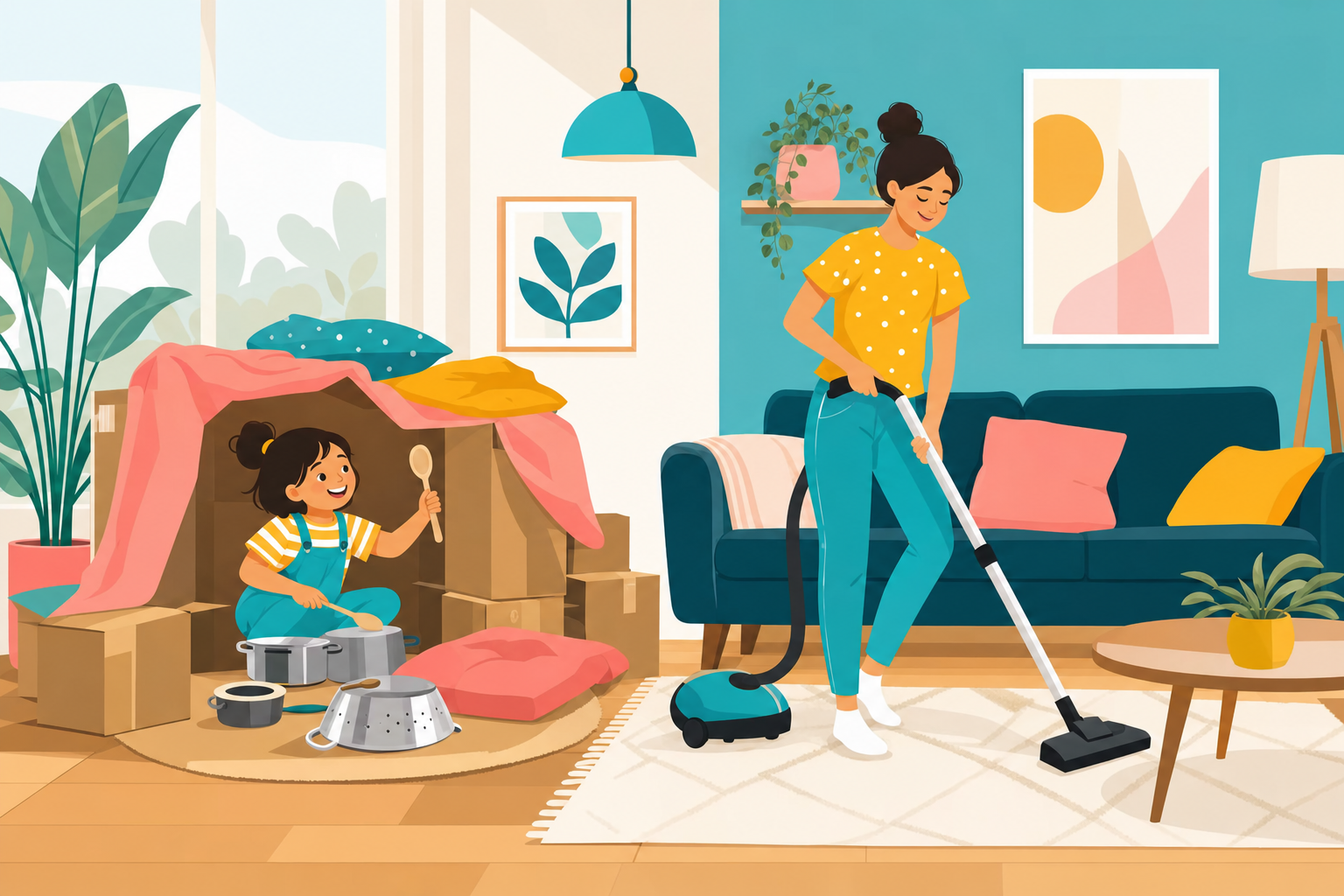
How to Keep a 4- to 8-Year-Old Busy While You Clean the House Without Screens, a Big Prep Bag, or Constant Help
You need to vacuum the living room, fold laundry, and wipe down the kitchen. Your kid is standing in the doorway asking what there is to do. Again.
Most parenting blogs will tell you to prepare elaborate busy bins, rotate toys weekly, or set up sensory stations. That's great advice for someone with time. You need something that works right now, uses what you already have, and keeps them occupied long enough to finish one full room.
This is how you actually do it.
Start With One Clear Job They Can Do Near You
The fastest way to buy yourself 15 minutes is to give your kid a real task in the same room. Not busywork. A job that contributes.
Hand them a damp microfiber cloth and point to baseboards, windowsills, or the bottom two feet of any wall. Tell them you need every visible mark gone before you can move to the next room. Kids this age love being assigned territory.
Other no-prep jobs that actually work:
- Sorting socks from the clean laundry pile by color, then by person
- Wiping down all door handles in the house with a baby wipe
- Using a dry duster or old sock to dust chair legs and table legs
- Straightening shoes by the door or books on a low shelf
- Collecting every stray toy car, block, or crayon into one bin
You are not trying to get the baseboards pristine. You are buying focus time. If they stick with it for ten minutes, you have won.
Set Up a Couch Fort With One Rule
Couch cushions, a fitted sheet, and two chairs create 20 to 30 minutes of independent play for most kids in this age range. The trick is the rule: they can only bring three toys inside, and they have to stay in the fort until you finish the room you are cleaning.
This works because it is contained, it feels special, and the arbitrary toy limit forces them to choose instead of dumping a bin and walking away. A flashlight, a stuffed animal, and a small basket of Legos will keep a 5-year-old busy longer than access to the entire playroom.
If you have siblings close in age, the fort becomes a shared project. One kid builds, the other decorates. You get 15 uninterrupted minutes while they negotiate the layout.
Forts also solve the rainy day indoor activities for kids problem without requiring you to plan, print, or purchase anything new.
Use the Timer Strategy for Rotations
Kids this age understand time limits better than open-ended instructions. Set a visible timer for 12 minutes and tell them that is how long they have to complete their assigned task, play independently, or stay in one spot.
When the timer goes off, they get a two-minute break to check in with you, grab a snack, or switch activities. Then you reset it and move to the next thing.
This structure works because it removes the constant "Are you done yet?" interruptions. They know the timer will tell them when it is time to move. You know you have 12 solid minutes to scrub the bathroom sink or fold a laundry basket without negotiating.
Pair this with a visual chore chart if your kid thrives on checking off tasks. Some children work better when they can see progress.
Give Them a Puzzle or Building Challenge With a Specific Goal
Open-ended play sounds great in theory. In practice, most kids this age do better with a target.
Instead of handing them a bin of Legos and saying "build something," try:
- Build a bridge that can hold this toy car
- Make a tower as tall as your knee using only blocks
- Complete this 48-piece puzzle before I finish loading the dishwasher
- Use every piece of train track to make one long loop
- Draw a picture of our house with at least five windows
The goal gives them a finish line. It also reduces the chance they will build for three minutes, lose interest, and come find you.
Coloring is one reliable boredom-buster, a free Chunky Crayon page buys you ten quiet minutes if you pair it with a timer and a specific instruction like "color every section that has a curve."
Create a Listening Activity With Audiobooks or Podcasts
This is not a screen. This is a book someone else is reading aloud while your kid colors, builds, or lies on the couch.
Most library apps offer free audiobook access. Download two or three picture books or early chapter books, start one playing on a phone or speaker, and set your kid up with a quiet activity for hands.
Good pairings for listening time:
- Audiobook plus a coloring book or blank paper and crayons
- Podcast plus Lego free-build
- Audiobook plus playdough or modeling clay
- Story plus simple puzzle (under 60 pieces for this age)
The audio keeps their brain engaged. The hands-on task keeps them seated. You get 20 to 25 minutes to clean the kitchen or switch the laundry without answering questions.
This is one of the most effective screen-free independent play ideas for siblings because both kids can listen to the same story while working on separate activities.
Use the Hide and Seek Object Hunt
Before you start cleaning, hide five small objects around one room. Tell your kid they have to find all five before you finish vacuuming, wiping counters, or folding the basket.
Use things they already know: a specific toy car, a wooden block, a plastic spoon, a small stuffed animal, a crayon. The hunt keeps them busy, and the search naturally keeps them out of your way because they are scanning low shelves, under furniture, and behind chairs.
This works especially well for high-energy 4- to 6-year-olds who cannot sit still for puzzles or building projects. It is also one of the easiest no-prep activities for kids at home because it requires zero supplies or advance planning.
Once they find all five, hide them again in the next room and repeat.
Let Them "Organize" Something Low-Stakes
Kids this age love sorting. Give them a junk drawer, a bin of art supplies, or a basket of play food and tell them to organize it however they want.
You are not looking for a system that makes sense. You are looking for 15 minutes of focus while they arrange markers by color, separate plastic food into meals, or line up toy animals by size.
Other things that work for organizing time:
- A pile of clean dish towels to fold and stack
- A bin of duplos or Legos to sort by color or size
- A basket of hair ties, clips, and headbands to separate
- A drawer of plastic food storage containers to match lids
The task feels important because you handed it to them as a real job. The lack of a correct answer means they cannot fail or get frustrated. You get uninterrupted time to clean the bathroom or wipe down the fridge.
Set Up a Simple Obstacle Course With Furniture
If your kid has energy to burn and you need them contained, use what is already in the room. Create a path they have to follow without touching the floor.
Example: Start on the couch, step to the ottoman, stretch to the chair, hop to the rug, crawl under the table, then back to the couch. Make them repeat it five times, or ten, or until you finish scrubbing the sink.
This solves the busy while cleaning house with kids problem for active children who will not sit still for quiet activities. It also works as one of the better quiet activities for 4-year-olds if you add a rule like "no noise" or "pretend the floor is sleeping."
For siblings, turn it into a follow-the-leader game. The older one designs the course, the younger one copies.
Build in a Snack Break as a Planned Pause
Do not wait until your kid is hungry and interrupting. Plan a snack break halfway through your cleaning block.
Set the timer for 15 minutes of independent play, then call them to the table for a pre-portioned snack (crackers, cheese cubes, apple slices, pretzels). Give them five minutes to eat and reset. Then send them back to the next activity.
This structure works because it gives them something to look forward to and eliminates the mid-task "I'm hungry" complaints. It also gives you a natural checkpoint to switch their activity if the first one is losing steam.
If you are dealing with multiple kids and need a moment to regroup, this is when you check in on how the day is going. Some families pair snack time with a quick after-dinner routine chart review if the cleaning session happens in the evening.
What to Do When They Still Interrupt
Even with the best setup, a 4- to 8-year-old will interrupt. Here is how to handle it without losing momentum.
First interruption: Redirect them back to the task or activity with one sentence. "You have four more minutes on the timer. Go finish your tower."
Second interruption: Offer a quick choice between two activities. "Do you want to keep building or switch to coloring?"
Third interruption: This is when you pull out the backup plan. Hand them a damp cloth and a mirror and tell them to wipe it until they can see their whole face without streaks. Or give them a roll of tape and a pile of scrap paper and tell them to make a tape sculpture. These are low-effort busy bins for kids without the bin.
The key is not to stop cleaning and entertain them. The key is to give them a new task that buys you five more minutes.
Why This Works Better Than Screens or Elaborate Prep
Screens end. When the show is over, your kid is back in your space, often more demanding than before because they have been passively entertained and now expect you to fill the gap.
Elaborate busy bins require setup time you do not have and often create mess you will have to clean later.
These strategies work because they use what you already have, require less than two minutes of setup, and teach your kid to tolerate boredom and solve it themselves. That skill matters more than finishing the laundry.
You are not trying to keep them busy for two hours. You are trying to buy yourself 15-minute blocks of focus time. String three of those together and you have cleaned the whole main floor.
When you are truly stuck and need one fast idea right now, spin the wheel at Boredom Wheel. It will hand you a single no-prep activity and get you back to the vacuum in under 30 seconds.