June 11, 2026
Keep Toddlers Busy While Cooking Dinner (No Screens!)
Discover 15+ no-prep kitchen activities that keep 2 to 6 year olds entertained during dinner prep. Screen-free, mess-free ideas for peaceful cooking time.
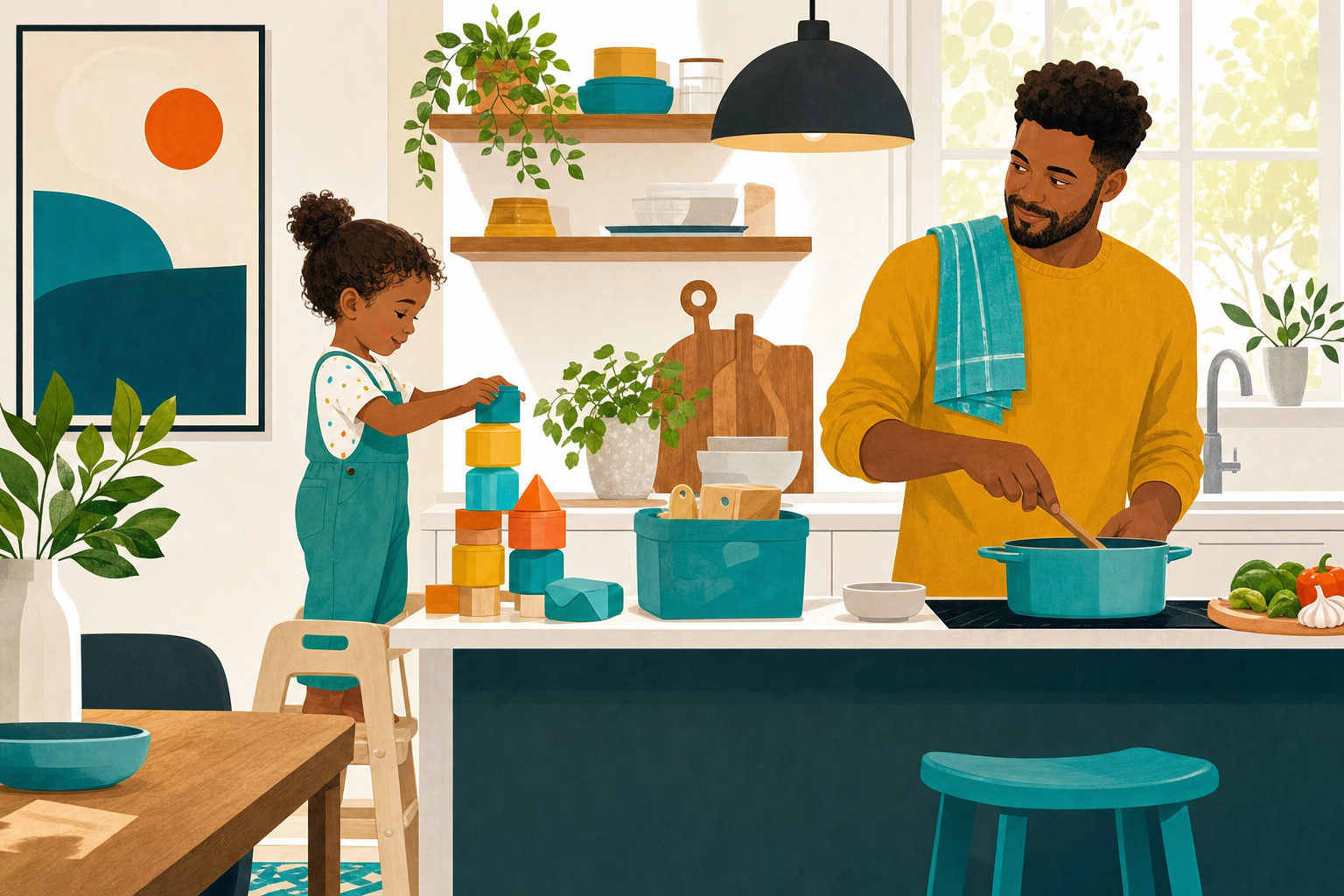
How to Keep a 2- to 6-Year-Old Entertained in the Kitchen While You Cook Dinner Without Screens, Mess, or Constant Interruptions
You're forty seconds into chopping onions when your four-year-old appears at your elbow asking for a snack, a story, and possibly a second breakfast. Dinner is due in thirty minutes and you haven't even turned on the stove yet.
Keeping a toddler busy while cooking dinner is one of the hardest parts of the day. You need them occupied, safe, and close enough to supervise, but not so close they're grabbing hot pan handles or asking you to find their lost dinosaur every ninety seconds. Here's how to set up a kitchen strategy that actually works.
Why the 5 p.m. Hour Is So Hard
Young kids are legitimately hungry and tired by late afternoon. They've burned through snacks, naps are wearing off, and they can smell dinner starting. That combo makes them clingy, restless, and convinced that right now is the perfect time to need you.
You can't eliminate the witching hour, but you can redirect it. The goal is independent play in the kitchen zone, not sending them to another room. You want eyes on them while your hands stay free.
Set Up a Kitchen Station Before You Start Cooking
The mistake most parents make is trying to invent an activity mid-chop while a pot boils over. Do this instead: before you pull out ingredients, spend two minutes setting up a dedicated spot.
Pick a corner of the kitchen or a small table just outside the doorway. Keep it within your line of sight but out of the cooking zone. A kid's chair or a padded spot on the floor works fine.
Stock one bin or drawer with no-prep kitchen activities for kids. Rotate what's in there every few weeks so it feels semi-new. Here's what goes inside:
- A set of measuring cups, spoons, and a big mixing bowl (let them "cook" with dry rice, beans, or pasta)
- Plastic food containers in different sizes for stacking and nesting
- A small whisk, wooden spoon, and a silicone spatula
- A dish towel they can fold, unfold, and refold
- A few pot lids to stack or spin
- Tupperware lids to sort by size
These aren't toys. They're real kitchen tools that make a child feel like they're doing something useful while you work. A three-year-old will happily transfer beans between bowls for fifteen minutes if you call it "cooking."
Give Them a Tiny Real Job
Preschoolers love being included, even if their help is mostly decorative. Hand them one small, safe task and let them own it.
Try these screen-free cooking time activities:
- Tearing lettuce for salad (put a bowl on their station and let them shred)
- Stirring a bowl of dry pasta or rice with a big spoon
- Snapping green beans into a colander
- Washing potatoes or apples in a basin of water with a soft brush
- Sorting silverware from the clean dishwasher (forks in one pile, spoons in another)
- Arranging dinner napkins at each place setting
The key is giving them something that takes several minutes and doesn't require your input. A two-year-old can wash the same potato five times in a row. Let them.
If your child tends to wander off or asks for constant feedback, set a visual timer (a sand timer or kitchen timer they can see). Say, "When the timer runs out, show me your work." It buys you a quiet ten-minute window.
What Works for Each Age Band
Ages 2 to 3: Sensory bins are your friend. Fill a shallow container with dry chickpeas, lentils, or rice. Add a few measuring cups and spoons. They'll scoop, pour, and bury things for twenty minutes. Keep a small handheld vacuum nearby for the inevitable spill.
Ages 3 to 4: Give them a "snack tray" to assemble. Put out a muffin tin, a few bowls of Cheerios, crackers, raisins, and cheese cubes. Let them sort snacks into each muffin cup however they want. They'll eat while they work and you get uninterrupted stir-fry time.
Ages 4 to 6: Hand them a damp cloth and ask them to wipe down the cabinet doors, baseboards, or dining chairs. Most kids this age are thrilled to have a real grown-up chore. Bonus: your kitchen gets cleaner. If they finish early, a free Chunky Crayon page buys you another ten quiet minutes at the table while you finish plating.
Quiet Activities While Making Dinner That Aren't Coloring
You've probably leaned on crayons a hundred times already this week. Here are six preschooler entertainment while parent cooks ideas that work just as well:
- Playdough at the kitchen table. Yes, it's technically messy, but if you keep it contained to a silicone mat or a baking sheet, cleanup is thirty seconds. Let them flatten, roll, and cut shapes with a butter knife.
- Magnetic letters or numbers on the dishwasher door. A two-year-old will move them around forever. A five-year-old can spell their name or count to ten.
- Sticker sheet on a piece of cardboard. Give them a stack of cheap stickers (dot stickers, grocery-store finds, or leftover birthday-party rolls) and let them cover a piece of cardboard or a paper plate. No rules, just sticking.
- Duplo or Mega Bloks tower challenge. Dump twenty blocks in a bin and ask them to build the tallest tower that doesn't fall. Set a timer and let them try again.
- Cotton-ball transfer. Put a pile of cotton balls in one bowl, a spoon in their hand, and an empty bowl two feet away. Challenge them to move every cotton ball using only the spoon. It's harder than it sounds and keeps them busy.
- Water play in a baking dish. Put a shallow baking dish with an inch of water on their station. Add a few plastic cups, a baster, or a small funnel. They'll pour and transfer until you call them for dinner.
If your little one tends to need a lot of structure, a toddler chore chart they helped decorate earlier in the week can remind them what "helping" looks like during dinner prep time. (More on age-appropriate tasks here.)
What to Do When They Still Interrupt You
Even with a great setup, some kids will wander over every three minutes. Here's how to handle it without losing your mind:
- Acknowledge them fast. Look up, make eye contact, say, "I see you. I'll be done stirring in one minute." Then redirect: "Go check if your tower is taller than the salt shaker."
- Use a phrase that means 'not now.' Try, "Hands are busy, back in two minutes," and stick to it. Consistency trains them to wait.
- Offer a snack *before* they ask. Put a small plate of crackers, apple slices, or cheese on their station the moment you start cooking. A full belly buys you focus time.
- Name what you're doing out loud. Narrate your work like a cooking show. "Now I'm adding garlic. Next, the chicken goes in the pan. Then we'll cover it." Some kids just want to know what's happening. Once they hear the plan, they settle.
If interruptions are constant and they're clearly just seeking connection, set a kitchen timer for five minutes and say, "When the timer beeps, we'll have a two-minute dance party, then I go back to cooking." A short burst of attention often resets them.
How to Keep This Working Night After Night
The magic of these how to keep kids occupied during dinner prep strategies is that they don't require a new plan every single evening. Once you've set up the station and identified two or three activities your child actually likes, you're set for weeks.
Rotate the bin contents every ten days so they don't get stale. Swap out the beans for rice, trade magnetic letters for foam shapes, switch playdough colors. Small tweaks feel brand new to a four-year-old.
On nights when you're truly fried and can't face setup, fall back on the simplest option: a bowl of warm soapy water, a few plastic dishes, and a sponge. Call it "washing up" and let them scrub to their heart's content. It's contained, quiet, and uses stuff you already have out.
One Last Thing
If your evenings feel chaotic beyond just the cooking window, a structured after-school routine can help your child arrive at dinnertime less wound up. (Here's a full guide to ending homework fights if that sounds familiar.)
But for right now, today, before tonight's dinner: set up that station, pick one activity, and give it a shot. You don't need a perfect system. You just need ten uninterrupted minutes to get the pasta water boiling.
That's enough.