June 15, 2026
Stop Kids Fighting: Fun Activities for Bored Siblings
Discover proven sibling boredom activities that stop the fighting. Turn rivalry into teamwork with these engaging ideas perfect for kids who clash when idle.
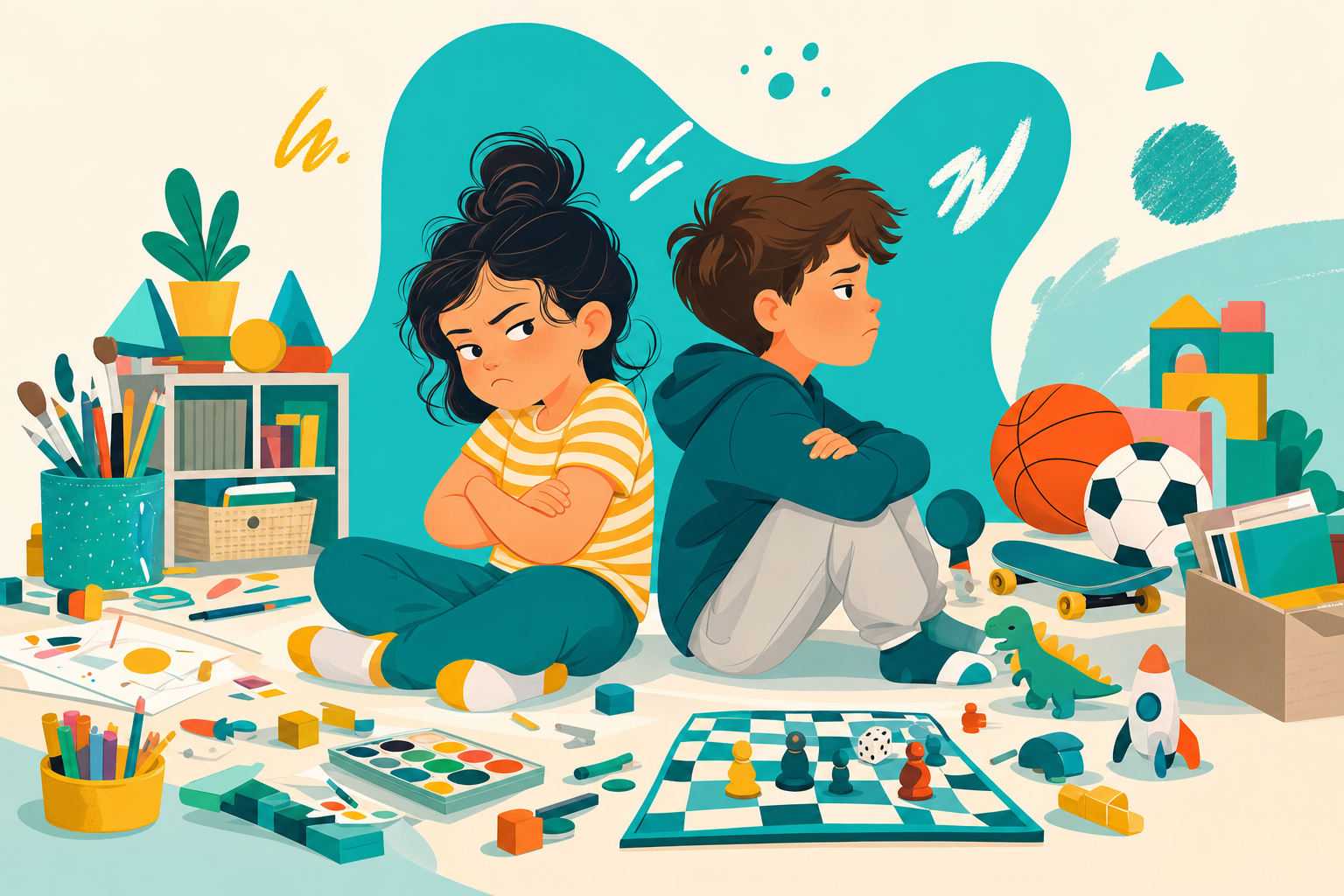
Activities for Two Kids Who Fight When They're Bored
Your kids just announced they're bored, and you know what's coming next: the poking, the yelling, the "Mom, he looked at me!" when you're trying to finish one thing in peace. Sibling boredom activities aren't just about keeping kids busy. They're about stopping the fights before they start.
Here's what actually works when two kids are circling each other like bored sharks.
Why Siblings Fight More When They're Bored
Bored kids don't sit quietly and stare at walls. They poke their sibling. They invade personal space. They pick fights because conflict is more interesting than nothing.
The fix isn't complex activities or Pinterest-level prep. It's giving them something to do together that has a clear goal, a short timeline, and ideally a tiny bit of friendly competition. You're not trying to bond them for life. You're trying to stop kids fighting bored for the next 20 minutes.
Activities That Channel Sibling Energy (Instead of Fighting It)
These work because they redirect that antsy energy into something concrete. No lecture about being kind. Just action.
Timed Challenges
Set a timer and give them a task to beat together. "Can you both pick up 50 toys before the timer goes off?" or "Can you build a pillow fort that fits both of you in under 10 minutes?" They're racing the clock, not each other, so it's cooperative without forcing fake teamwork.
Other timed wins: sort the recycling, match all the socks in the laundry basket, see how many times they can pass a ball without dropping it. Small stakes, clear end point.
Separate But Parallel Activities
Sometimes the best sibling boredom activities are ones where they're in the same room but not directly interacting. Give them each a coloring page (a free Chunky Crayon printable buys you ten quiet minutes), a puzzle, or a small building project. They can chat if they want, but there's no shared toy to fight over.
This works especially well after school when everyone's overstimulated and needs parallel play more than partnership.
Relay Races (Indoor or Outdoor)
If they're bouncing off the walls, send them outside or down a hallway for relay races. Crab walk to the mailbox and back. Hop on one foot to the tree. Carry a cup of water without spilling. Make it weird and specific so they're laughing instead of competing.
Indoor version: balance a stuffed animal on your head while walking across the living room, or army-crawl under the dining table.
Treasure Hunts with Teamwork Built In
Hide five small objects around one room and tell them they have to find all five together before you finish folding laundry. The trick is making it collaborative. They both have to touch each item before it counts, or they have to hold hands while searching. It's goofy enough that they forget to bicker.
If you've got a few extra minutes, write clues on sticky notes. One clue leads to the next. The final clue leads to a snack or a five-minute screen time reward.
Build a Shared Project
Cardboard box fort. Lego city. Blanket tent. Give them one big messy goal and let them figure it out. Don't manage it. Don't referee unless someone's genuinely hurt. They'll bicker, negotiate, and eventually build something.
The key is making the project big enough that they need each other. One kid can't hold up four chair cushions alone. That forces cooperation without you hovering.
Activities for Siblings When You Need Them Separated
Some days they just can't be in the same space without poking each other. That's fine. Send one to the backyard with sidewalk chalk and one to the kitchen table with playdough. Give them different tasks in different rooms.
Rotate them every 15 minutes if you need to. One kid does a puzzle, the other does jumping jacks in the garage, then switch. It's not punishment. It's just reality when sibling energy is running too hot.
If you're managing this while cooking dinner, try the activities that keep toddlers busy in the kitchen without you stopping every two minutes.
Stop Kids Fighting Bored with a Quick Reset
If they're already mid-fight, an activity won't fix it. You need a reset first. Send them to separate rooms for two minutes (not timeout, just a break). Then come back with a concrete activity and a timer.
"Okay, you have seven minutes to build the tallest tower out of these blocks. Go."
The activity gives them something to focus on that isn't each other's annoying face. The timer gives them an end point so it doesn't drag into another fight.
Boredom Activities That Work for Mixed Ages
If your kids are different ages, pick activities where the older one can help without the younger one feeling bossed around. Scavenger hunts work well for this. So do races where each kid has a different task (older kid hops on one foot, younger kid crawls).
Avoid activities where the older kid has a massive advantage. Older kid always wins at board games? Skip it. Try something physical or silly where age doesn't matter as much, like who can make the funniest face or balance a spoon on their nose the longest.
If you're dealing with a wide age gap at a birthday party, these strategies for mixed-age parties help keep everyone engaged without the older kids getting bored or the younger ones getting steamrolled.
Activities for Siblings Who Need Movement
Some sibling pairs fight because they're understimulated. They need to move, and if you don't give them an outlet, they'll wrestle on the couch until someone cries.
Obstacle course in the backyard. Dance party in the living room (set a timer for three songs). Jumping jack contest. Soccer in the driveway. Anything that gets their heart rate up for ten minutes will drain enough energy that they can sit still afterward.
If you're stuck indoors, try hallway bowling with a rolled-up sock and plastic cups, or tape a line on the floor and see who can balance-beam walk it without falling off.
When One Kid Picks Fights on Purpose
Sometimes one sibling is bored and decides poking their brother is the most interesting option. If this is a pattern, try an after-play routine chart to build in better transition habits, or a reward chart for interrupting if one kid constantly disrupts the other.
But in the moment? Separate them, give the instigator a high-energy task alone (run laps around the yard, do 20 jumping jacks, reorganize the shoe bin), and give the other kid something calm. They don't need to play together right now.
Quick Wins for Right Now
You don't need a perfectly curated activity list. You need something that works in the next three minutes. Here's what to try when you're mid-meltdown:
- Send them outside with a ball and a timer. "Come back in 15 minutes."
- Give them a shared snack challenge. "Can you both build a cracker tower taller than this cup?"
- Put on a song and have them freeze-dance until it's over.
- Hand them a deck of cards and tell them to sort it by color or number. No game, just sorting.
- Give them each a flashlight and send them to a dark room to make shadow puppets.
These aren't magical. They're just bridges to the next calm moment.
The Real Goal: Redirect Before the Fight Starts
The best sibling boredom activities are the ones you pull out before the fighting starts. When you hear "I'm bored," that's your 60-second warning. Hand them a task, set a timer, or point them toward the backyard before they start poking each other.
You're not trying to entertain them for hours. You're buying yourself 15 minutes of peace and giving them something to do that isn't annoying their sibling. That's a win.