October 20, 2026
Keep Kids Quiet During Work Calls: No-Screen 30-Min Plan
Screen-free quiet activities for kids ages 2 to 10 to keep them busy during work calls. No-prep, low-mess ideas parents can start using today.
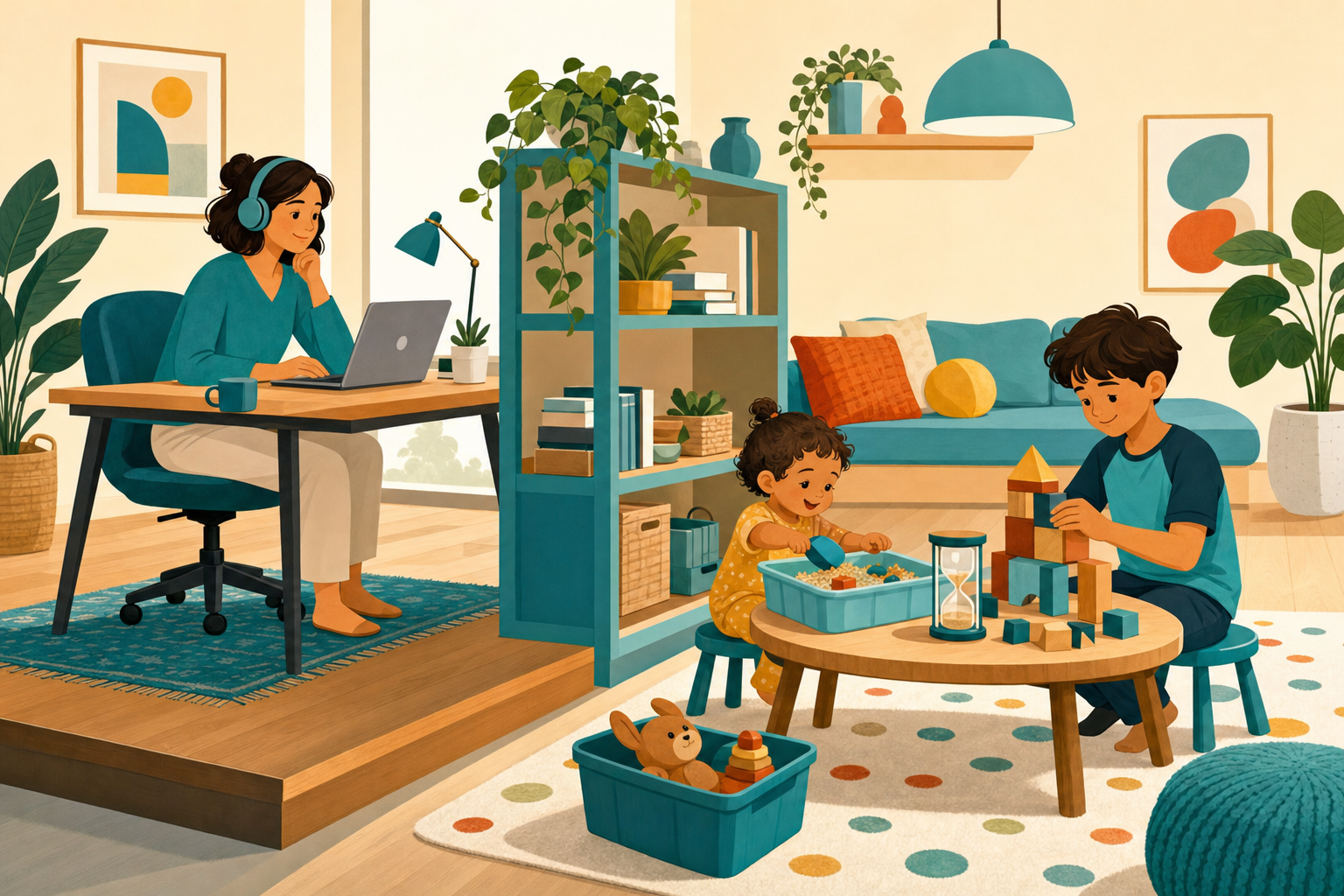
How to Keep Kids Quiet During a Work Call Without Screens: A 30-Minute Independent-Play Plan (Ages 2 to 10)
Your calendar says "call at 2pm" and your brain says "nothing good happens between now and 2:30." You know the drill: you mute yourself, someone screams about a missing sock, and you spend the whole meeting half-listening while mouthing "one minute" at a kid who does not care about your meeting etiquette.
Most advice online just hands you a list of activities (sensory bins, scavenger hunts, building challenges) and calls it a day. That's not the hard part. The hard part is the logistics around the call: what happens when two kids want the same toy, who takes the 6-year-old to the bathroom, and what you do when the activity ends at minute 12 but your call runs until minute 30. This is the plan that actually covers that.
Why Generic Activity Lists Fail During an Actual Call
A regular list assumes unlimited time and a parent who can supervise. A work call gives you neither. You need activities that:
- Start without your help (no scavenger hunt you have to set up mid-call)
- Stay low-mess so there's no cleanup crisis at minute 15
- Don't require your voice or attention to keep going
- Have a built-in stopping point so you're not improvising when it ends
That last one is the piece almost everyone skips, and it's the reason calls fall apart in the final ten minutes. If you want a broader rotation of ideas for regular work-from-home days (not just calls), this screen-free activity rotation for working parents is worth bookmarking for the in-between hours.
The 5-Minute Setup That Prevents 90% of Interruptions
Do this before you log in, every single time. Skipping setup is why the "quiet activity" turns into a knock on your door at minute 4.
- Bathroom and snack, non-negotiable. Ask directly: "Do you need to pee? Are you hungry or thirsty?" Kids under 7 often don't register these needs until they're desperate, and desperate means interrupting you.
- Pre-pour drinks and pre-portion snacks in a spot they can reach without you. A cup with a lid and a small bowl of crackers on the counter removes two reasons to knock.
- Set a visible timer. A kitchen timer, a sand timer, or a phone propped up and locked on the clock. Kids 4 and up can track "when the sand runs out" far better than "in 30 minutes."
- State the one interruption rule out loud: "Only knock if there's blood, fire, or someone's really hurt." Say it every time, even if it feels repetitive. Repetition is what makes it stick.
- Hand them the activity already set up, not a box of supplies to sort through. A tray, a bin, or a folder that's ready to go the second you sit down.
The 30-Minute Plan by Age
This is the no-prep quiet activities list ages 2 to 10 actually need, broken down by what each age can realistically sustain alone.
Ages 2 to 3 (10 to 15 minutes of true independent play, plan for check-ins)
- A muffin tin with dry pasta or pom-poms and a spoon for transferring
- A board book stack next to a stuffed animal "audience"
- Stickers on an index card (low-mess, self-contained)
- Water painting with a cup of water and a paintbrush on the back patio or in the bathtub (paints with water, dries clear, zero mess)
At this age, don't aim for the full 30 minutes solo. Plan a 60-second check-in around minute 10 to reset the activity, then let them go another stretch.
Ages 4 to 6 (15 to 25 minutes)
- A "mail sorting" box: old envelopes, junk mail, a stamp pad, and a basket to sort into
- Playdough with a rolling pin and cookie cutters, kept on a placemat to contain the mess
- A flashlight and a dark closet for "shadow hunting"
- A simple coloring page. Coloring is one of the most reliable boredom-busters at this age, and grabbing a free page from Chunky Crayon right before your call means they're settled in with something new instead of the same three crayons they're bored of.
Ages 7 to 10 (full 30 minutes, often longer)
- A LEGO or building challenge with a specific prompt written on a card ahead of time: "build the tallest tower using only these 20 pieces"
- A notebook and colored pencils for a comic strip or "design your dream bedroom"
- A simple recipe card for a no-cook snack they assemble themselves (yogurt parfait, trail mix)
- A list of 10 household objects to find and photograph on a kid-safe tablet or old phone (not internet-connected, just camera)
For more ideas that work on a normal day, not just during a call, this list of independent indoor activities for ages 2 to 10 covers a wider rotation so you're not reusing the same three things every week.
Handling Siblings, Bathroom Needs, and the "I'm Done" Moment
Work-from-home activities for siblings need one extra rule: different activities, not shared ones. Shared activities during a call are a fight waiting to happen because someone always wants the other person's piece. Give each kid their own tray or bin, even if the activities are similar.
If a bathroom need comes up mid-call, mute yourself, point, and keep typing or nodding. Most calls survive a 20-second mute. What they don't survive is you trying to finish a sentence while a kid is hopping in place next to you.
The "I'm done" moment at minute 12 is predictable, so plan for it. Keep a backup activity in a separate, closed container that only comes out when the first one is finished. Don't show both at once. A second surprise option resets their attention without you having to leave your desk.
When the Timer Runs Out and You're Still on the Call
This is the gap nobody plans for. Keep one "emergency extension" activity that's slightly more novel than everything else, something you only pull out when the 30 minutes is up and the call isn't. A new-to-them puzzle, a sticker book they haven't opened, or five extra minutes with a special snack works because novelty buys attention faster than anything familiar.
If meltdowns are a bigger pattern than just call-time boredom, a sticker chart can help with whining and big reactions outside of work hours too, so you're not only managing the symptom during calls but building the skill over time.
The Real Goal: A Repeatable Routine, Not a Perfect Activity
No single activity keeps a kid quiet for 30 minutes every time. What works is the routine: same setup steps, same interruption rule, same backup plan for when it ends early. Do this a few times and your kids start to anticipate it, which is half the battle. The activity matters less than the predictability around it, and predictability is exactly what a frazzled parent on a call doesn't have time to improvise.