October 23, 2026
Stop the "I'm Bored": Screen-Free Independent Play Ideas
Tired of "I'm bored"? Discover low-prep, screen-free activities that get kids ages 3-7 playing independently indoors, even on rainy days.
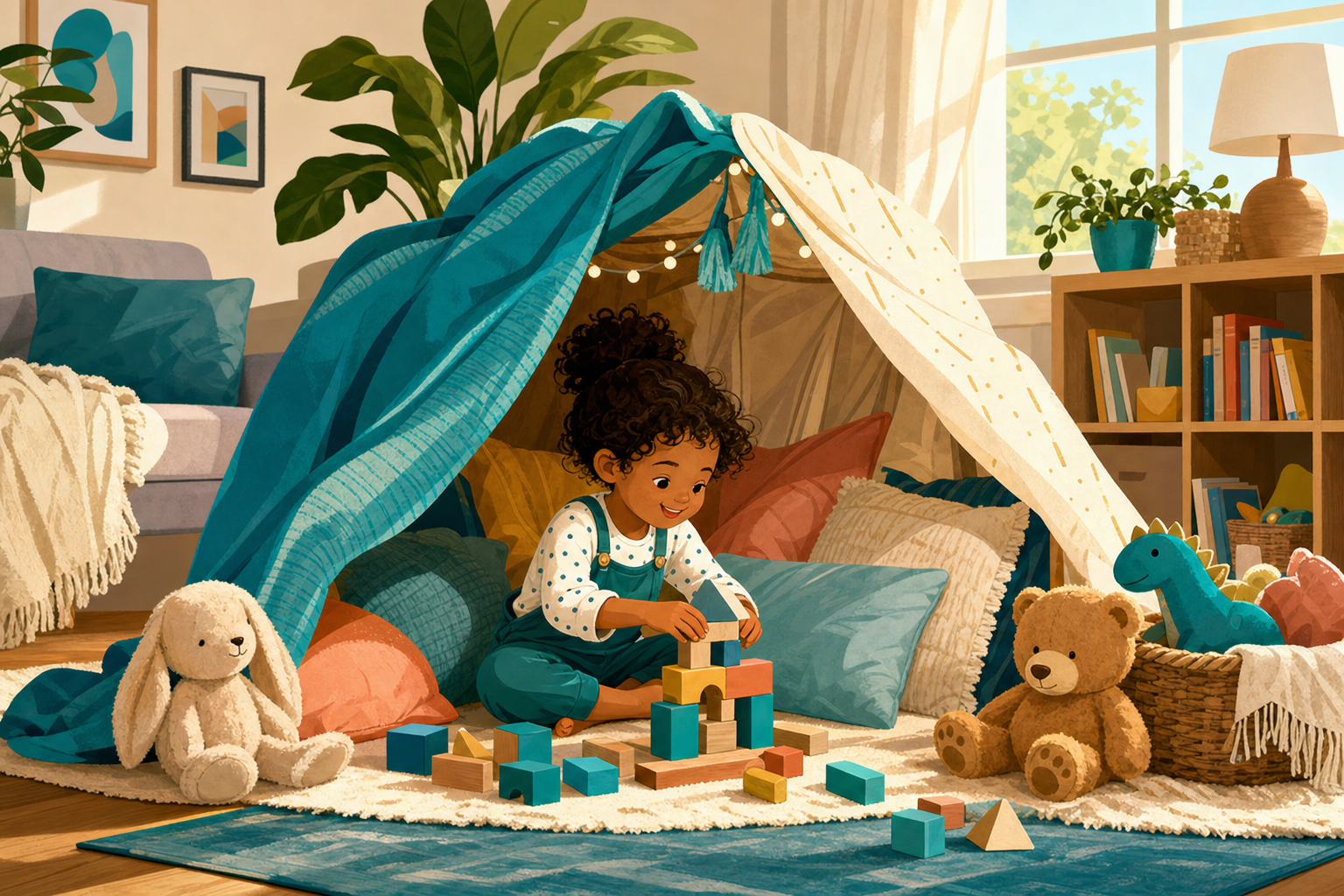
How to Get Kids to Play Independently Indoors Without Screens (Even When They Keep Saying "I'm Bored")
You set up the blocks. You pulled out the puzzles. You even found that craft kit from the birthday goodie bag. Ten minutes later, your kid is standing in the kitchen doorway announcing "I'm bored" like it's breaking news.
Most advice tells you to just add more activities. More forts, more scavenger hunts, more sensory bins. But if your child won't play unless you're sitting right there, the problem isn't a lack of ideas. It's that independent play is a skill, and skills need to be built gradually, not demanded all at once.
Why Kids Reject Independent Play (It's Not the Activity's Fault)
Kids who say "I'm bored" the second you walk away usually aren't actually bored. They're used to you being the entertainment. If every game at home has involved a parent narrating, refereeing, or playing a character, solo play feels lonely by comparison, not fun.
There's also a confidence piece. Younger kids (ages 3 to 5 especially) sometimes genuinely don't know what to do with open-ended toys without a script. Give a 4-year-old a bin of blocks with no suggestion, and they may freeze instead of building.
The fix isn't a better toy. It's a gradual handoff, so your child learns that playing alone can be just as good as playing with you.
The Gradual Handoff: How to Start Independent Play Without a Meltdown
Don't go from "parent plays every game" to "go entertain yourself for an hour." That gap is too big and it backfires. Instead, shrink the distance in stages.
Step 1: Play alongside, not with. Sit near your child doing your own quiet task (folding laundry, answering email) while they play. You're present but not participating.
Step 2: Set a timer for a short stretch. Start with 5 minutes. Tell your child, "I'm going to unload the dishwasher. You play with the kitchen set until the timer beeps, then I'll come see what you made." A timer gives a concrete end point, which removes the anxiety of "forever alone."
Step 3: Stretch the time slowly. Once 5 minutes feels easy, try 10, then 15. Most kids ages 5 to 7 can build up to 20 to 30 minutes of solo play within a couple of weeks if you add time gradually instead of jumping straight to "go play by yourself for an hour."
Step 4: Praise the independence, not just the product. Instead of "what a pretty picture," try "you played by yourself for the whole timer. That's awesome." You're reinforcing the behavior you want more of.
If your child also struggles with switching from one activity to the next without a fuss, a visual transition schedule can help bridge the gap between "parent time" and "solo play time" so it feels like a planned part of the day instead of being abandoned.
Low-Prep Quiet Activities That Actually Hold Attention
The activities that work best for reluctant independent players share three traits: low setup, a built-in goal, and no need for an audience. Here are ones that consistently outlast the "I'm bored" clock.
Ages 3 to 5:
- A laundry basket "car wash" for toy vehicles using a wet washcloth and dry towel
- Sorting a jar of buttons, pom-poms, or dry pasta by color into muffin tins
- A sticker scene, let them build a whole world on one page with a sheet of dollar store stickers
- Pretend grocery store using pantry cans and a toy cash register or clipboard
Ages 6 to 7:
- A "mission" card: write one task on an index card ("build the tallest tower you can" or "draw a map of your bedroom") and let them complete it solo, then report back
- Sticker or tape "stained glass" art on a window
- A simple scavenger hunt list they check off themselves
- Dot-to-dot books, mazes, or word searches for kids who are starting to read
For quiet, low-mess options that work even while you're nearby, quiet activities you can use while working from home double nicely as rainy day activities without screens, since most need almost no supervision once they're set up.
Coloring deserves a mention too. It's one of the most reliable boredom-busters because it has a built-in stopping point (a finished page) and needs zero parental input once the crayons are out. A free Chunky Crayon coloring page can buy you ten to fifteen genuinely quiet minutes, especially if you let your child pick the picture themselves.
Build a Rotation So Boredom Doesn't Creep Back In
Even great activities get stale if they're out all the time. Kids stop noticing toys that never move. A simple rotation system fixes this without requiring you to buy anything new.
- Keep 8 to 10 activity bins or baskets in a closet
- Only 3 to 4 are out at any time
- Swap them every few days, not daily. Kids need repeat exposure to really dig into something
- Let your child help choose which bin comes out next. Ownership makes them more likely to actually play with it
If you're managing siblings of different ages, rotation gets trickier because a 3-year-old and a 7-year-old rarely want the same bin. Pair each rotation with a simple job or play assignment so nobody is left standing around waiting for you to referee. A chore chart designed for siblings of different ages uses a similar age-tiered structure that you can borrow for an activity rotation chart too: older kids get more complex solo tasks, younger kids get simpler ones, and everyone has their own lane.
What to Actually Say When They Say "I'm Bored"
Your response in the moment matters as much as the activity itself. A few scripts that work better than jumping in to fix it:
- "Boring is where ideas start. What's the first thing that comes to mind?" This puts the problem back in their hands without dismissing them.
- "You have 10 minutes before I need your help with something. What will you build?" Giving a deadline paired with a task (even a fake one) creates urgency.
- "Pick one of your three rotation bins." If you've already set up a rotation, this removes decision fatigue entirely. They just choose and go.
- "I'll come watch what you made in 5 minutes." This promises connection later, which reduces the urge to interrupt you right now.
What you want to avoid is immediately taking over the activity yourself. If a parent always rescues boredom by playing the game, kids learn that boredom is a button that summons you. Let the silence sit for a minute before you respond. Often a new idea shows up on its own.
The Bottom Line
Independent play for kids ages 3 to 7 isn't about finding the one magic toy. It's a skill built through small, timed stretches of solo play, a rotation of low-prep activities that don't need an audience, and a parent who resists the urge to jump back in the second things go quiet. Start with 5 minutes today. By next week, you might get a whole 20 minutes of actual peace, and that's worth more than any new toy on the shelf.