October 18, 2026
Keep Kids Busy While You Work: Screen-Free Activities
Struggling with work calls and kids underfoot? Try this quiet, low-mess activity rotation for ages 2 to 10 and reclaim your focus today.
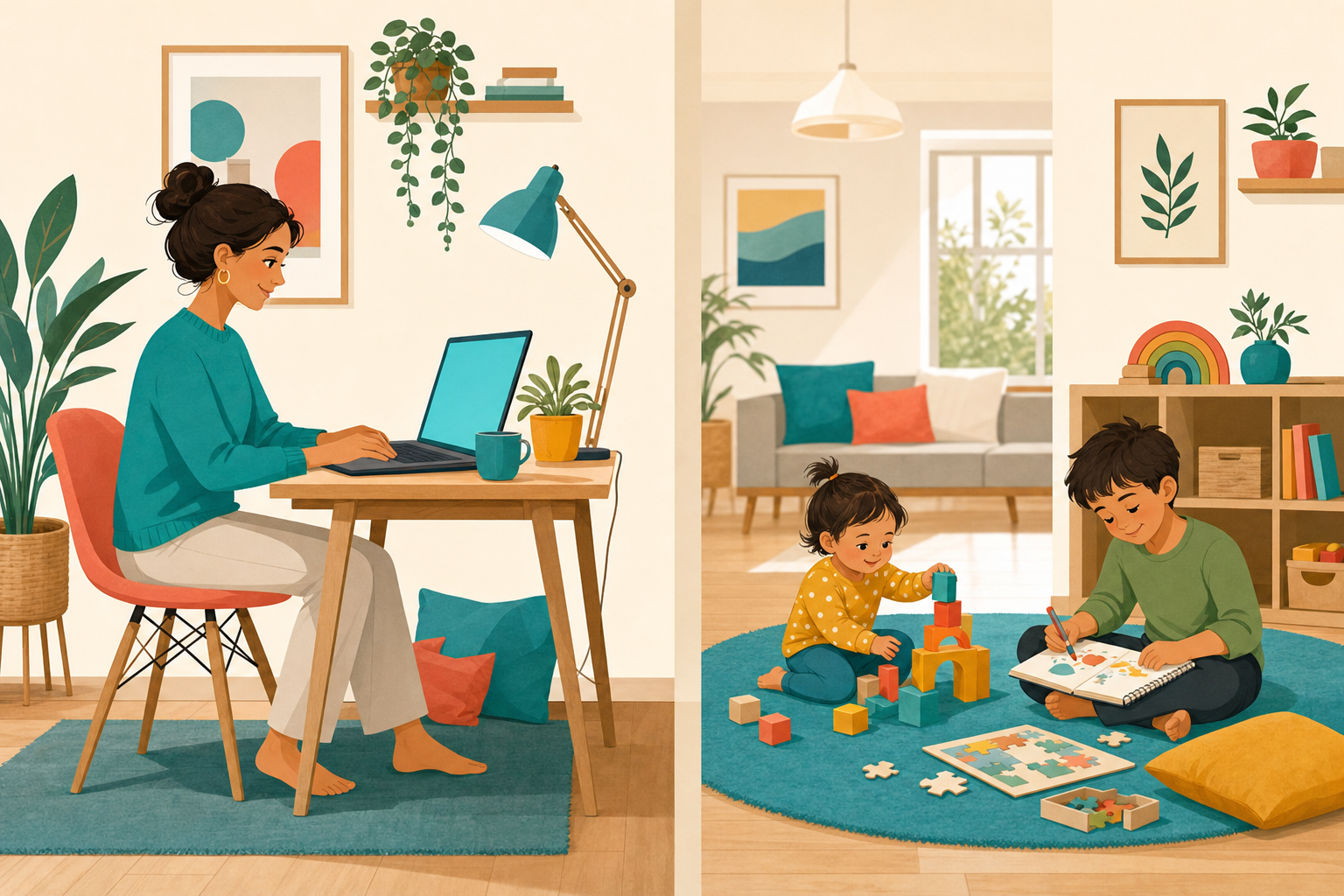
How to Keep Kids Busy While Working From Home Without Screens or Constant Interruptions
You have four minutes until your call starts, a kid asking for a snack, and a sinking feeling that the next hour is going to be a disaster. Most "busy activity" lists don't help in that moment because they're just 35 random ideas with no system behind them. You need a rotation you can grab from fast, sorted by how loud it is, how messy it gets, and how long your kid can actually stick with it.
This is a practical setup for screen-free activities while parents work from home, built around real work blocks instead of a giant Pinterest list.
Why the Big Lists Don't Work Mid-Workday
A list of 40 activities sounds helpful until you're mid-meltdown and have to scroll through sensory bins, scavenger hunts, and obstacle courses while your camera is about to turn on. The problem isn't a lack of ideas. It's that none of those lists tell you:
- How long the activity actually buys you (5 minutes or 45?)
- Whether it needs setup you don't have time for right now
- Whether it's quiet enough for a call
- Whether a 3-year-old and an 8-year-old can both do it without a referee
A rotation fixes this. You set it up once, then grab from it without thinking.
Build a Rotation, Not a List
Instead of one long list, sort activities into three buckets ahead of time. Keep them in labeled bins or a drawer your kid can reach.
Bucket 1: Silent, for calls. No talking required, low noise, can be done solo.
Bucket 2: Quiet, for deep work. Some noise is fine, but no need for you.
Bucket 3: Independent, for background hours. Longer play, more mess tolerance, you check in every 20 to 30 minutes.
This matches quiet activities kids can do alone indoors to the actual shape of your workday instead of hoping one activity covers every situation. For a deeper library of indoor options to pull from, screen-free indoor activities kids can play independently is worth bookmarking alongside this rotation.
Match the Activity to the Work Block
Here's the part most lists skip entirely: timing.
For a 15 to 30 minute call:
Use the silent bucket. Think a muffin tin with dry pasta and a spoon for a 2-year-old, a sticker book for a 4-year-old, or a graphic novel for an 8-year-old. These are no-prep activities for kids while parent works, meaning you hand it over and walk away immediately.
For a 1 to 2 hour deep work block:
Use the quiet bucket. Building blocks, a puzzle, a shoebox fort, or a drawing station all work here. Independent play ideas for kids while working should require zero adult input once started, so test them on a weekend first to make sure your kid can actually do it alone.
For a half day with scattered meetings:
Rotate through all three buckets in 20 to 30 minute chunks. Kids lose interest fast, so swapping the bin every half hour beats pulling out one giant activity and hoping it lasts all morning.
The Low-Mess Rotation by Age
Mess tolerance is the other thing generic lists ignore. Here's a low-mess independent play ages 2-10 breakdown you can actually keep in a closet.
Ages 2 to 4:
- Water painting with a brush and cup of water on the porch or in the tub (zero actual mess)
- A busy bag with Velcro strips, zippers, and snaps
- Stacking cups or nesting bowls from the kitchen
- Board books in a reading nook with a flashlight
Ages 5 to 7:
- Sticker scenes or dot-to-dot books
- A simple weaving loom or lacing cards
- Magnetic tiles (loud to dump out, quiet once building)
- A "mail" station with envelopes, stamps made from stickers, and paper
Ages 8 to 10:
- Origami with a video-free instruction booklet
- A journal with writing prompts
- A simple knitting or friendship bracelet kit
- Chapter books with a reading log to fill in
If you've got more than one kid in this age spread, pair them up on something like a joint art table rather than trying to run two separate rotations. It cuts down on the "I'm bored" interruptions because they're at least bored together.
What to Do During an Actual Call
The silent bucket only works if you set the expectation before the call starts, not during it. Thirty seconds before you log on:
- Hand over the bin without asking "do you want to..."
- Set a visible timer (a sand timer works great for ages 3+)
- Say exactly what happens after: "When the timer is done, we'll have a snack."
This structure is part of why a sticker chart style approach works so well for other sticking points too. If whining tends to show up right as you're trying to start a call, a printable sticker chart for whining can help you build the quiet-during-calls habit the same way.
For rainy days when outside play isn't an option and you're stacking three work blocks in a row, lean harder on the rotation instead of improvising. Rainy day activities without screens fall apart fast when there's no plan, so treat a rainy forecast as your cue to pull out the full bin lineup from the start of the day instead of rationing it.
A Quick Reward Loop Keeps the Rotation Working
Kids stick with independent play longer when there's a small, predictable payoff at the end. Coloring is one reliable boredom buster. A free Chunky Crayon page buys you ten quiet minutes and doubles as the "treat" at the end of a work block, no extra supplies needed.
If your kid tends to lose steam on any routine after a few days, not just this one, it helps to build in variety on purpose. The same logic that keeps a chore chart fresh applies here: swap two items in each bucket every week so the bins don't go stale. For more on the general setup of screen-free play blocks across a whole workday, keeping kids busy while you work from home covers the bigger picture if you want to build this out further.
The Bottom Line
You don't need 40 new ideas. You need three labeled bins, a timer, and a plan for what happens when the timer goes off. Sort by noise and mess instead of novelty, match the activity to the length of your work block, and refresh the bins weekly so nothing gets stale. That's the whole system, and it's the part every generic list leaves out.