June 3, 2026
50 Solo Play Ideas That Keep 4-Year-Olds Busy (Finally!)
Discover proven independent play ideas that actually work for toddlers. Keep your 4-year-old busy alone with activities they'll love while you get things done.
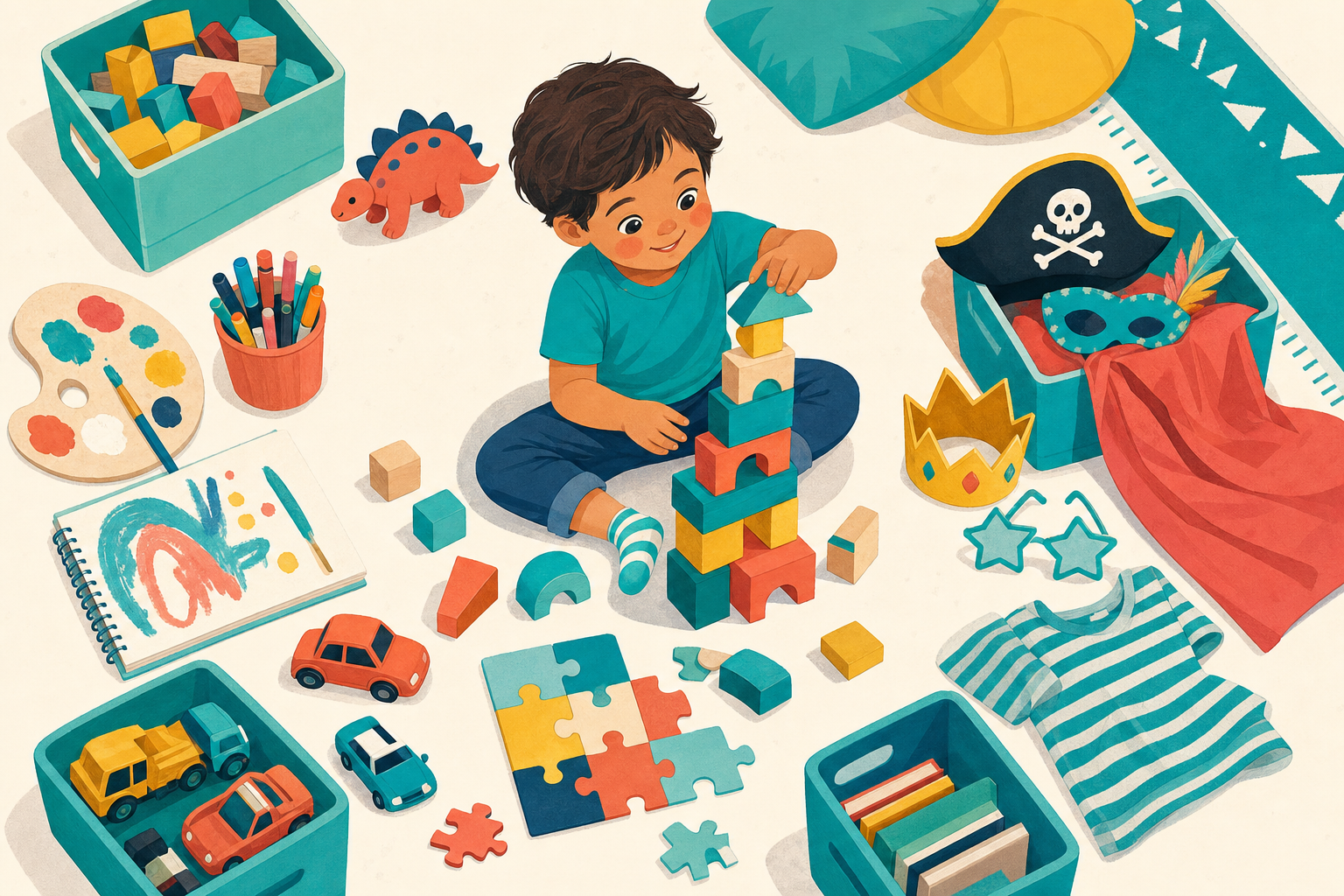
Solo Play Ideas That Actually Keep a 4-Year-Old Busy
Your four-year-old just announced they're bored for the third time before 9 a.m. You need twenty minutes to answer work emails, fold laundry, or just drink coffee while it's still warm. But handing them a tablet feels like admitting defeat, and every toy they own is suddenly invisible.
The secret isn't finding the perfect toy. It's setting up independent play ideas that feel new, give them a clear mission, and don't require you hovering three feet away. Here's what actually works when you need solo play toddler activities that buy you real time.
Set Up a Sensory Station They Can Control
Four-year-olds love making decisions without your input. A sensory station gives them that power.
Fill a shallow bin with dry rice, lentils, or dried pasta. Add measuring cups, funnels, small toys, and spoons. Put it on a towel or shower curtain on the floor. Tell them they're the boss of this station and walk away.
Water play works the same way. A plastic tub with an inch of water, cups, and sponges keeps them busy longer than you'd expect. Bonus: add food coloring or dish soap for bubbles and you've just extended your alone time by ten minutes.
The key is giving them control. You're not playing with them. You're handing them the setup and letting them run it.
Create a "Secret Mission" Box
Four-year-olds respond to structure disguised as adventure. A secret mission box gives them tasks that feel important, not like chores.
Grab a shoebox or small basket. Inside, put index cards with simple missions written in marker or drawn as pictures. Examples:
- Find five red things in the house
- Build a tower taller than your knee
- Hide three stuffed animals and draw a map
- Make a fort under the kitchen table
- Sort all the blocks by color
They pull one card, complete the mission, then pull another. You're not supervising. You're just the person who checks in when they yell "Done!"
This trick also works when your kid says they're bored but refuses every suggestion you make. The box removes you from the equation. They're choosing the activity themselves.
Give Them Real Work With Real Tools
Four-year-olds don't want pretend kitchens when they can use the actual sink. They want to feel useful, and real tasks keep them focused longer than toy versions.
Hand them a spray bottle of water and a rag. Tell them the baseboards need cleaning. They'll scrub for twenty minutes without realizing it's not a game.
Other real-work ideas that keep kid busy alone:
- Sorting socks from the laundry basket
- Washing plastic dishes in a tub of soapy water
- Watering plants with a small watering can
- Sweeping the porch with a child-size broom
- Organizing a junk drawer or toy bin by category
The task has to feel legitimate. If you say "go pretend to clean," they'll quit in two minutes. If you say "I need help cleaning these windows before Grandma visits," they'll stay busy because the job matters.
Build a Rotation of Solo Play Bins
Novelty matters more than the toy itself. A four-year-old will ignore a basket of blocks for weeks, then play with it for an hour straight if you hide it and bring it back.
Fill four or five bins with different activities. Each week, only one bin is available. The others stay in a closet or garage. Rotate them every Monday.
Bin ideas:
- Building blocks or magnetic tiles
- Play dough with cookie cutters and rolling pins
- Dress-up clothes and a mirror
- Art supplies (paper, crayons, stickers, tape)
- Small figures and a cardboard box for a "house"
Coloring is one reliable boredom buster. A free Chunky Crayon page buys you ten quiet minutes when you need them most.
The rotation keeps each bin exciting. When the blocks come back after a month, they feel brand new.
Set a Timer and Call It "Quiet Time"
Four-year-olds who've outgrown naps still need downtime. The problem is they won't take it unless you frame it correctly.
Quiet time isn't a punishment. It's a daily routine where they play alone in their room for 30 to 45 minutes. No screens. No you.
Set a timer they can see. Tell them when the timer goes off, quiet time is over. Give them three activity choices: books, stuffed animals, or puzzles. Then close the door.
The first few days will involve protests. By day five, most kids settle into the rhythm. By day ten, they'll stop fighting it because the routine is predictable. If you need help building routines that stick, the visual morning routine chart approach works the same way for quiet time. Make it visual, keep it consistent, and let the routine do the nagging for you.
Use Audio Stories as a Solo Activity Anchor
Four-year-olds can't read independently yet, but they can listen. Audiobooks and story podcasts turn listening into an activity that requires zero parental involvement.
Queue up a 20-minute story or podcast episode on a device they can operate themselves. Give them paper and crayons to draw what they hear. Or hand them a pile of blocks to build the scene.
The audio keeps them anchored. They're not just sitting still; they're listening and creating at the same time. And you're in the next room folding laundry in peace.
Popular options: library apps with free audiobooks, kid-safe podcast apps, or even old-school CDs if you still have a player.
Let Them "Cook" in a Play Kitchen With Real Ingredients
Play kitchens are fine, but they're more engaging when you add real ingredients they can actually manipulate.
Set them up at a low table with:
- A muffin tin
- Measuring cups and spoons
- Dried beans, rice, or cereal
- Small bowls and containers
Tell them they're making a recipe for dinner. They pour, scoop, transfer, and pretend. The sensory element plus the pretend play keeps them engaged longer than plastic food ever could.
Cleanup is easier if you do this over a sheet or towel. Bonus: they're practicing fine motor skills and measurement concepts while you get fifteen minutes of solo time.
Stop Explaining and Start Walking Away
The biggest mistake parents make with independent play ideas is hovering. You set up the activity, then stand there waiting to see if it works. Your presence kills the independence.
Set up the activity. Give one sentence of instruction. Then leave the room.
If they follow you, redirect them once: "I'll check on you in ten minutes. Right now is your playtime." Then go back to what you were doing.
Four-year-olds will test the boundary. If you return every time they call your name, they'll keep calling. If you wait, they'll eventually start playing. It takes practice for both of you.
Your Kid Doesn't Need More Toys
When solo play isn't working, the instinct is to buy a new toy or try a fancier activity. That's rarely the problem.
Four-year-olds need:
- Predictable solo time built into the day
- Fewer toys available at once (rotation, remember?)
- Activities that feel important or give them control
- Parents who don't rescue them from boredom every five minutes
If your kid still resists solo play after two weeks of consistent routines, check the schedule. Are they overtired? Overstimulated? Hungry? Sometimes the issue isn't the activity; it's the timing.
And if all else fails, pull out the secret mission box, set the timer, and walk away. Eventually, they'll stop yelling for you and start building that block tower.