October 24, 2026
Keep Kids Quiet While You Work From Home (Ages 2-10)
Screen-free, no-prep activities that keep kids ages 2 to 10 busy and quiet so you can focus on work. Try this 45-minute rotation today.
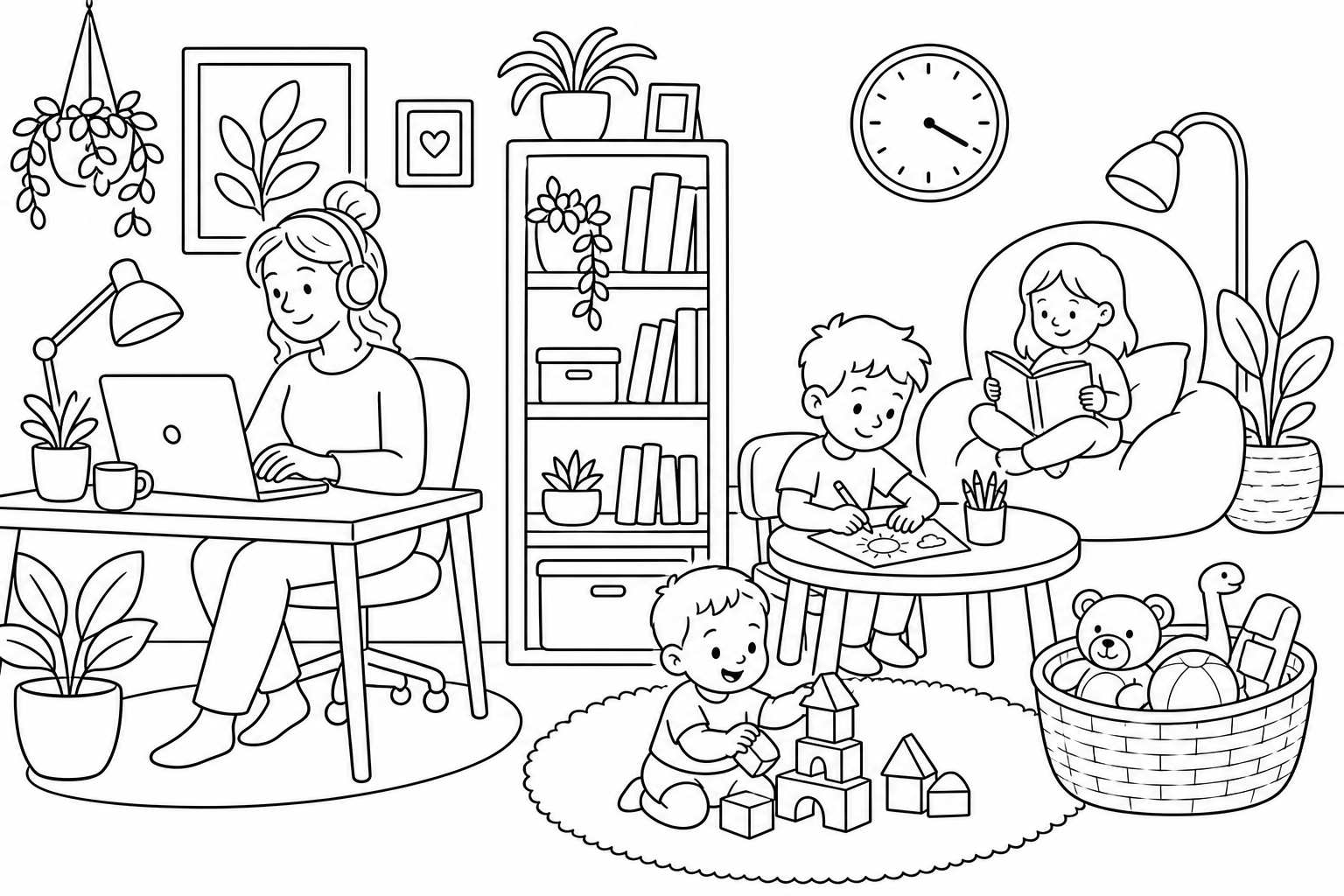
How to Keep Kids Quiet and Busy While You Work From Home: A 45-Minute Screen-Free Rotation for Ages 2-10
Your laptop is open, your coffee is cold, and your kid just asked for the fourth snack in twenty minutes. If you're searching for quiet activities for kids while parents work from home, you don't need another Pinterest list of forty craft ideas. You need a system you can run on autopilot, today, with stuff already in your house.
Here's a realistic 45-minute rotation that works across ages 2 to 10, requires almost no setup, and tells you exactly which parts need your eyes and which parts your kid can handle solo.
Why Most Activity Lists Fail at This
Most advice treats "keep kids busy" like one problem with one solution. It isn't. A 2-year-old needs you within arm's reach. A 7-year-old can disappear into a project for twenty minutes if you set it up right. An 8-year-old wants to feel trusted with something slightly grown-up.
The real issue isn't finding activities. It's sequencing them so the loud or needy parts happen before your meeting, not during it, and the low-noise indoor activities happen while you're actually on camera.
The 45-Minute Rotation, Broken Into Three Blocks
Think of the 45 minutes in three 15-minute chunks. Each one has a job to do.
Minutes 0 to 15: The Launch (needs a little of your attention)
This is where you hand off the activity and get your kid settled before you mentally check out. For younger kids especially, skipping this step is why independent play collapses after five minutes.
- Ages 2-4: A muffin tin "sorting station" with dried pasta, pom-poms, or buttons sorted by color into the cups. Takes 90 seconds to set up, keeps toddler hands busy, and it's quiet.
- Ages 5-7: A "mystery bag" with 5 small objects to draw from memory after looking for 10 seconds. Self-directed once explained.
- Ages 8-10: A timed challenge like building the tallest tower from index cards and tape, or writing a short comic strip. Older kids do better with a goal, not just "go play."
Minutes 15 to 30: The Deep Work Window (true independent play)
This is your actual meeting-safe zone. Pick activities that have built-in staying power because the task itself takes a while to finish.
- Ages 2-4: Water painting with a cup of water and a paintbrush on the sidewalk or in the bathtub. No mess, no mistakes possible, endlessly repeatable.
- Ages 5-7: A "treasure hunt" with written or picture clues hidden around one room, set up the night before. Coloring is another reliable boredom-buster. A free Chunky Crayon page buys you ten quiet minutes without any prep on your end.
- Ages 8-10: A LEGO build with a specific brief ("build something that could fly"), a puzzle with a time goal, or a workbook page they chose themselves.
If you've got a call scheduled right in this window, pair the activity with a visual cue like a sand timer so your kid knows exactly how long "quiet time" lasts without asking you every three minutes. We cover this exact setup in more detail in a no-screen plan for surviving work calls.
Minutes 30 to 45: The Wind-Down (lower stakes, some noise is fine)
By now attention spans are fading. Let the noise level creep back up a little as a reward for the quiet stretch.
- Ages 2-4: Dance party with a kitchen timer set to one song, or stacking cups into towers to knock down.
- Ages 5-7: A simple scavenger hunt around the house for items of a certain color.
- Ages 8-10: Free build time, journaling, or a short chore they can do without supervision, like folding their own laundry pile. If you're trying to get siblings sharing tasks without turning it into a fight, this rotation pairs well with a chore chart built for mixed-age siblings.
Matching Activities to Noise Tolerance, Not Just Age
Age matters, but noise tolerance matters more when you're on a call. Sort your go-to activities into two buckets and keep a running list taped inside a cabinet:
Silent or near-silent (safe during calls):
- Coloring, drawing, tracing
- Playdough with no tools (tools click and clack)
- Reading or looking at picture books
- Sticker books
- Sorting and matching games
Low-noise (fine for focused work, not for calls):
- Building blocks
- Puzzles
- Quiet pretend play with stuffed animals
- Light music with headphones (kids', not yours)
Knowing which bucket an activity belongs to before you need it saves you from scrambling mid-meeting. This is also the core idea behind building a library of screen-free independent play ideas you can grab without thinking.
No-Prep Options for When You Have Zero Minutes
Some days you don't get to plan ahead. These no-prep quiet time activities work for ages 2 to 10 with nothing but things already lying around:
- A roll of painter's tape to make a "road" or hopscotch grid on the floor
- A flashlight and a dark closet for "shadow puppets"
- An old phone or remote with the batteries removed for toddler pretend play
- A deck of cards for solo games like solitaire or building card towers
- A notebook and a "story starter" sentence you write at the top
Keep a small bin of these low-cost props in a spot your kid can reach without asking you. Activities kids can do without help only work if the materials are already accessible.
Rainy Day and Backup Plan
When outdoor time isn't an option and you still need rainy day activities while parent works, lean harder on the sensory and fine-motor stuff: water beads, kinetic sand, a bin of rice with hidden toys, or an indoor obstacle course made from couch cushions. These burn more energy than quiet crafts, which matters when kids can't run around outside first.
Setting the Rules Before You Start
How to keep kids quiet indoors usually comes down to one missing piece: clear expectations set before the timer starts, not mid-meltdown. Before you sit down to work, say exactly what's allowed:
- "You can come get me if you're bleeding or the house is on fire. Everything else waits for the timer."
- Show them where the timer is and what happens when it goes off (you check in, they get a new activity).
- Keep the first few rotations short, 10 to 15 minutes, and build up once they trust you'll actually show up when the timer ends.
The Bottom Line
You don't need forty new toys or a Pinterest-worthy sensory bin. You need a repeatable rotation, a clear sense of which activities are call-safe, and a few props staged where your kid can reach them. Build this once and you'll spend a lot less time refereeing "I'm bored" and a lot more time actually getting through your to-do list.