October 28, 2026
Screen-Free Activities to Keep Kids Busy While You WFH
No-prep, quiet independent play ideas for ages 2 to 10 that last 20 to 30 minutes, perfect for work calls and rainy days. Try the rotation today.
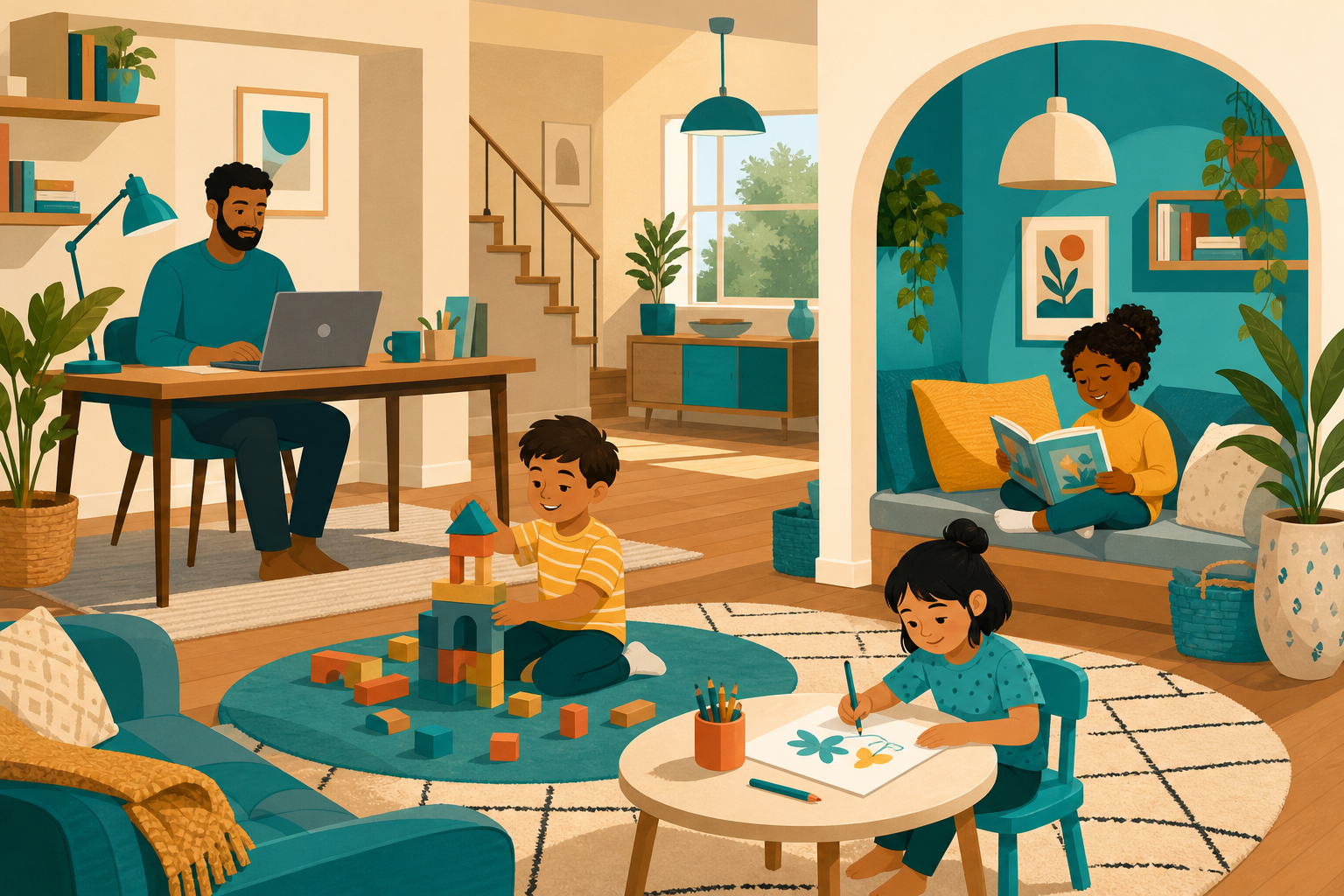
What Can Kids Do Indoors Without Screens While You Work From Home? A Quiet 30-Minute Activity Rotation for Ages 2 to 10
Your calendar says "focus block," but your kid just asked you the same question four times in two minutes. You don't need another list of 50 random activities. You need a plan you can actually run during a real workday, including the 10am call where someone might see your background.
Here's a rotation system that works because it's built around time blocks, not a pile of ideas you'll forget exist by 2pm.
Why Random Activity Lists Don't Survive a Workday
Most indoor activity roundups assume you have time to prep, supervise, and clean up. On a real work-from-home day, you have none of that. You need activities that last roughly 20 to 30 minutes, require almost no setup, and don't generate noise that travels through a laptop mic.
The fix isn't more ideas. It's a rotation: three or four activity types you cycle through in order, so your kid always knows what's next and you're not improvising mid-meeting.
The 30-Minute Rotation, by Age
Set a timer. When it buzzes, the activity changes. Kids as young as 3 understand "when the timer beeps, we switch" faster than you'd expect.
Ages 2 to 4 (shorter blocks, 10 to 15 minutes each):
- A muffin tin with dry cereal, pom-poms, or small toys to sort by color
- A basket of fabric scraps and a big cardboard box to "decorate"
- Water painting outside a window or on the bathroom tile with a paintbrush and cup of water
- Stacking cups, nesting bowls, or a laundry basket "boat"
Ages 5 to 7 (20-minute blocks):
- A scavenger hunt list taped to their door (five household items that start with each letter of their name)
- Building a fort from couch cushions with a flashlight for "reading inside"
- A coloring page or drawing prompt at the kitchen table
- Playdough with cookie cutters and a rolling pin
Ages 8 to 10 (full 30-minute blocks):
- A LEGO or building challenge with a card that says "build something that can hold a book"
- A workbook page, maze book, or word search
- Setting up a pretend store or restaurant with handmade menus and play money
- A solo scavenger hunt around the yard or house with a checklist
The key is matching the activity length to the attention span, not the other way around. A 3-year-old will not make it 30 minutes on anything. A 9-year-old can, if the task has a clear goal.
No-Prep Activities for the Exact Moment a Call Starts
You don't always get warning. Here's what to grab when you have 60 seconds before you're on camera:
- Hand them a clipboard with paper and say "draw me a map of your room"
- Set out a sticker sheet and a blank piece of paper, no instructions needed
- Give them a flashlight and send them on a "hunt" for five hidden objects you scattered earlier (keep a small stash in a drawer for this)
- Put on a kitchen timer and challenge them to build the tallest tower of blocks before it goes off
Coloring is one of the most reliable low-noise, no-prep options because it needs zero setup and travels anywhere in the house. Keeping a stash of fresh pages on hand helps, and a free Chunky Crayon page can buy you a genuinely quiet 15 to 20 minutes since each one is generated on the spot from whatever your kid is into that day, so it doesn't go stale the way a printed stack does.
If you want a broader stash of go-to ideas specifically built around WFH days, this list of screen-free activities to keep kids busy while you work from home pairs well with the rotation above, especially on days when your meetings run long and you need backup options fast.
Keeping the Rotation Running All Day (Without a Meltdown at Lunch)
The rotation breaks down around hour three, usually because the kid gets bored of switching or decides the timer is unfair. A few fixes:
- Let them pick the order, not the activities. Write four activity names on index cards and let them choose which comes first. Choice without overwhelm keeps the system running longer.
- Keep one "surprise" activity in reserve. Something new, even something small like a sticker book you haven't opened yet, resets interest fast.
- Use a visual timer, not just a sound. A sand timer or a phone app with a shrinking circle helps kids under 6 understand how much time is left without asking you every 90 seconds.
- Attach a small reward to finishing the rotation, not to any single activity. A simple check mark after each block, with a treat after four blocks, keeps motivation up without you having to referee each task. If your kid tends to lose interest in tracking systems after a day or two, a short reward chart built for kids who give up too soon is a quick way to fix that without starting from scratch.
For rainy days specifically, when outdoor time isn't an option to reset energy between blocks, lean harder on movement-based indoor activities between the quiet ones: an indoor obstacle course in the hallway, a "freeze dance" break, or jumping jacks before sitting back down. Rainy day independent play works best when it alternates quiet and active, not when it's quiet the whole stretch.
When the Rotation Still Falls Apart
Some days it won't work, and that's fine. If you've got back-to-back calls and zero buffer, check out this more detailed breakdown of keeping kids busy while you work from home across a full day, which goes deeper into handling multiple meetings in a row without losing your mind.
The goal isn't a perfect, silent household. It's buying yourself real, workable chunks of time, one rotation block at a time, so the next meeting doesn't start with you muting mid-sentence to referee a snack dispute.
If you're ever stuck mid-call with a kid standing at your elbow, spin the wheel for an instant idea. Sometimes the fastest fix is just handing them a random suggestion and letting them run with it.